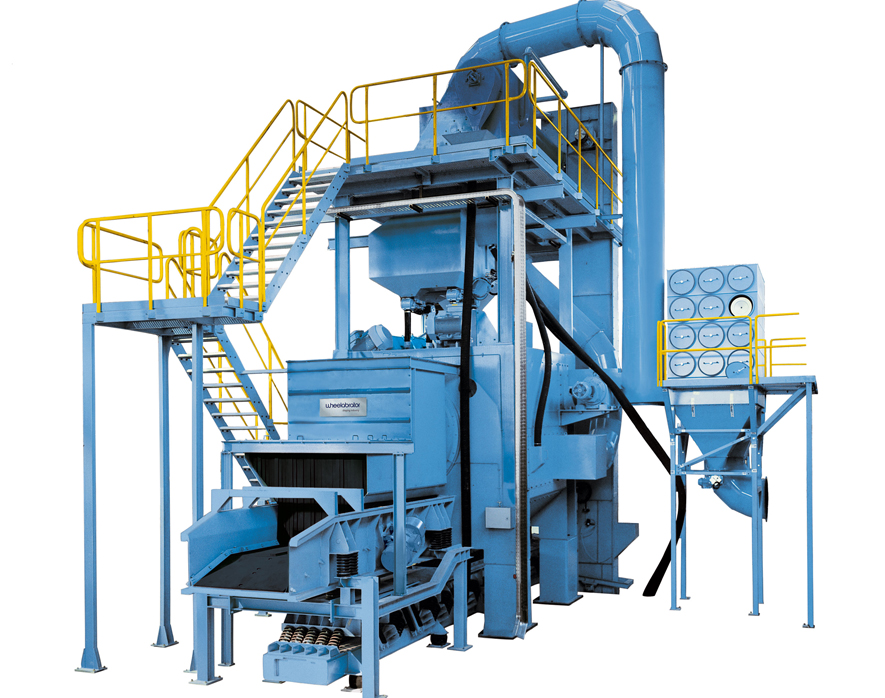

Tumble more castings, keep up with the moulding line: Wheelabrator's CT boosts capacity at Waupaca
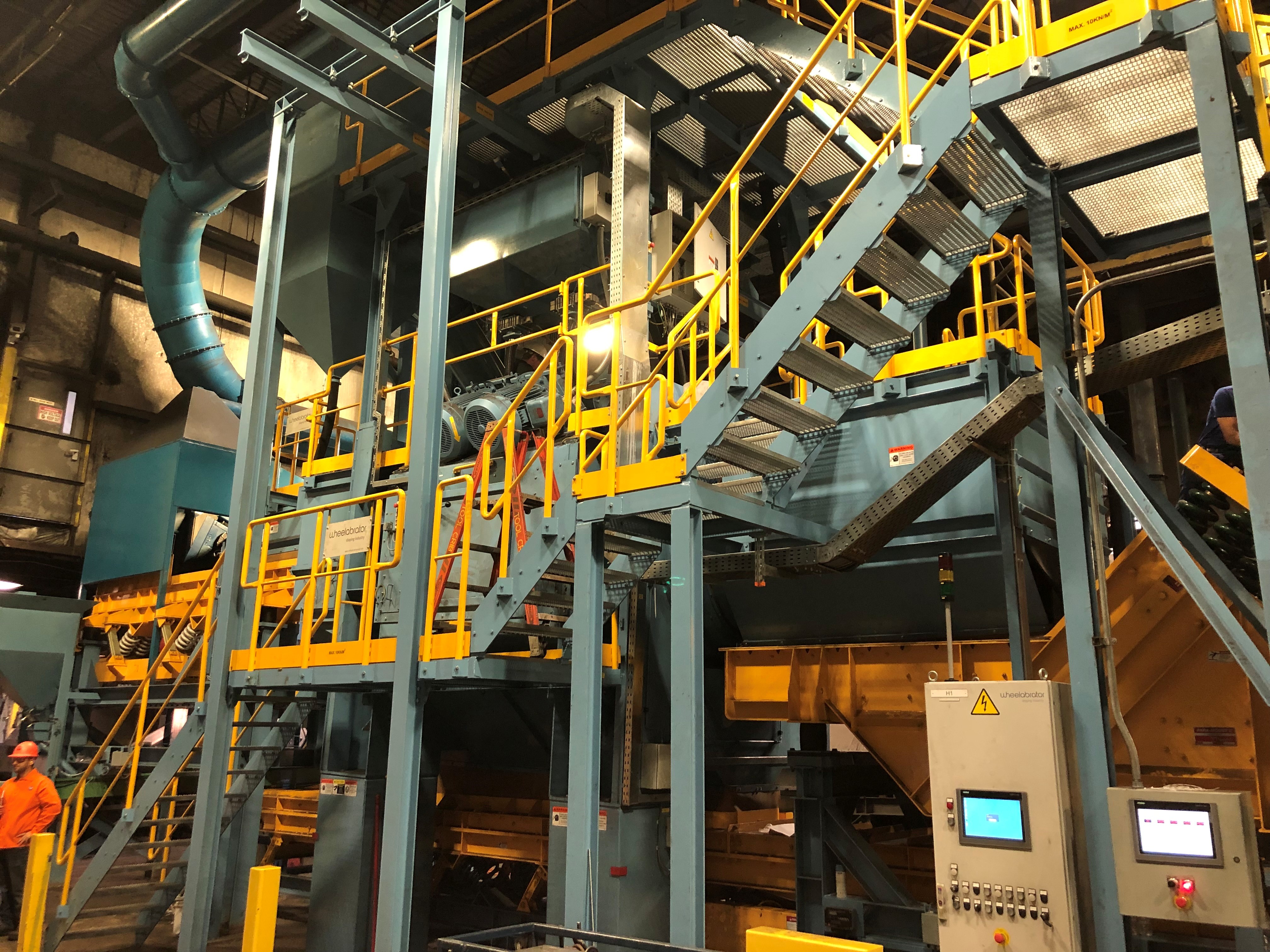
CT-4 handles mixed runs from two fast moulding lines, adapts automatically
As the world’s largest independent iron foundry, Waupaca Foundry’s website invites its customers to “Discover the Power of True Capacity”. Waupaca made a similar discovery back in 2018, when it purchased a Wheelabrator TUMBLAST® Continuous (CT) machine.
“The biggest selling point for the CT-4 and the biggest benefit for our plant is its ability to clean at a pass-through rate and keep up with moulding,” says Michael Barden, Waupaca Foundry’s Engineering Manager. “It’s a huge advantage.”
Restricted by manual handling
Waupaca employs 3,500 workers across four US locations. Of its three facilities at its Wisconsin HQ, Plant One runs one horizontal and five vertical moulding lines pouring grey iron. Its jobbing workload covers everything from bearing and hydraulic housings to cookware and engine manifolds—around 250,000 tons annually.
To clean the wide range of castings produced on four of its vertical lines, Plant One employed three Wheelabrator TUMBLAST® Batch machines plus five Wheelabrator Spinner Hanger machines for more delicate parts. But the manual loading and unloading meant cleaning throughput lagged behind the moulding line.
“The spinner hangers are versatile but labor-intensive, taking two people to place individual castings on hangers and unload afterwards,” explains Michael. “Our blasting operators would often have to stack castings on pallets prior to cleaning so that we could clear the line and keep the moulding machine running. Getting all those WIP castings back into the cleaning process reduced labor efficiency.
To raise cleaning capacity, Waupaca considered many suppliers and machines that might help it clean more of its parts. Then it asked Wheelabrator to analyze its whole casting portfolio.
“They thought we could go from batch tumbling 40% of our components to tumbling over 60% through the gentler process in a CT-4. That, plus its continuous throughput and hands-off automation, made the CT the right fit. And that decision has really paid off.”
- Michael Barden, Waupaca Foundry’s Engineering Manager
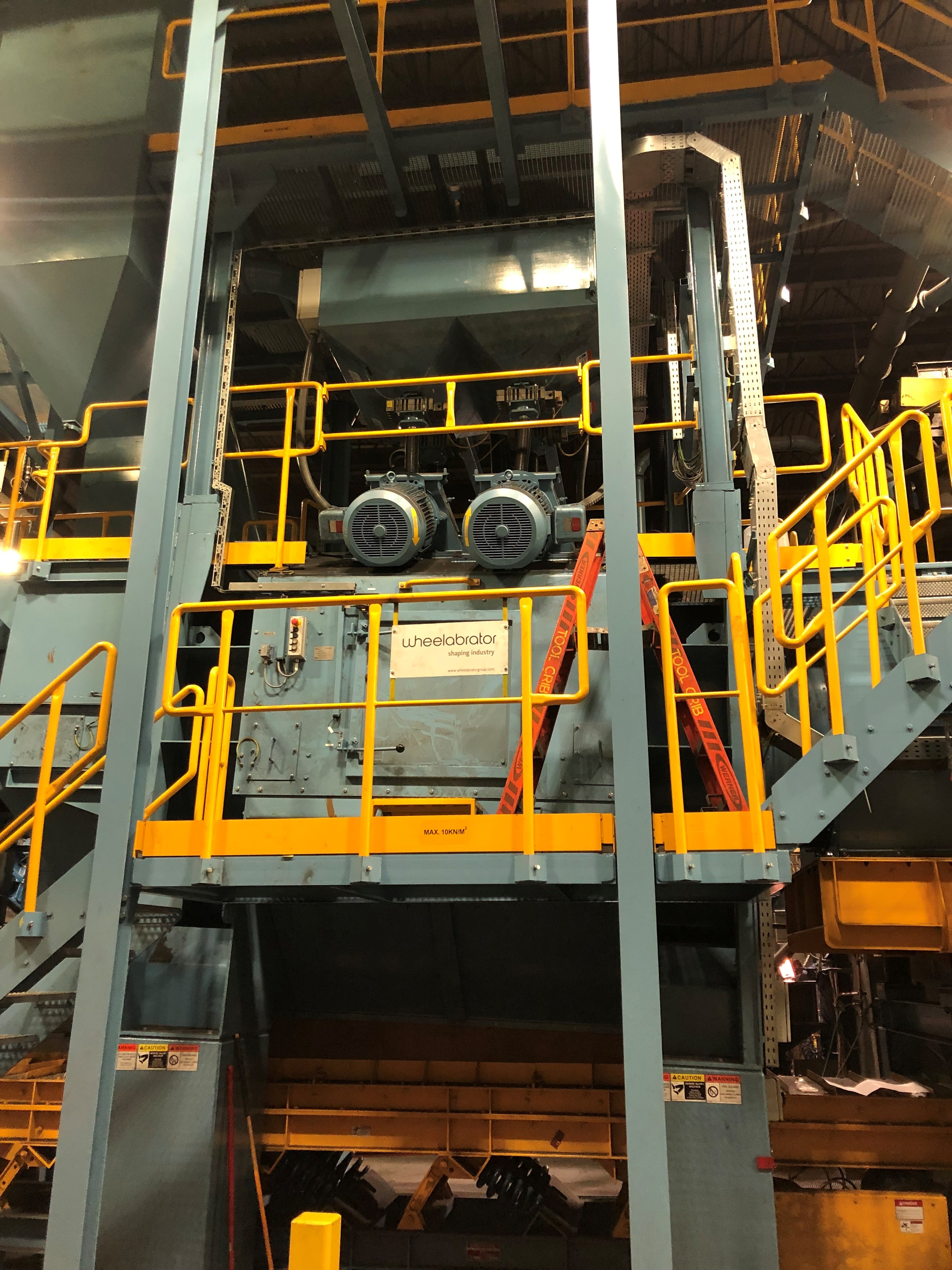
The Wheelabrator TUMBLAST® Continuous (CT): the perfect partner for fast moulding
Offering both high throughput and excellent quality, Wheelabrator’s ingenious design ensures all parts of a casting are evenly blasted while cooling both castings and sand. Because it senses the current total casting weight and adjusts its barrel rotation speed and abrasive flow to match, it adapts automatically to any changes in line speeds or casting volumes to maintain continuous production.
“Our one Wheelabrator CT-4 machine can keep up with two of our vertical moulding lines,” says Michael. “We produce more castings per hour and per shift, so we get through more jobs, with improved labor efficiency. Quality is consistently as good or better than batch blasting.”
The Continuous TUMBLAST’s process continues to impress Waupaca with its gentleness, cleaning cast iron cookware perfectly. The combination of greater capacity and versatility has also helped Waupaca win more new business.
“Cookware is a very high proportion of our production currently,” says Michael. “Just running them through the CT rather than having to manually hang up each piece has made a real difference. Being more confident we can process these products faster has also helped us be more competitive.”
Handling mixed loads, completely automatically
As a jobbing foundry producing up to 15 or even 20 different parts in a day, Plant One constantly changes the casting mix that’s running through the Wheelabrator TUMBLAST Continuous machine. But there’s little need for time-consuming set-up between runs.
“The CT is known for handling mixed loads really well,” says Michael. “On a Spinner Hanger, you would have to change the trees that hold the castings. On the CT, you just let the next part come in.”
This sophisticated automation is also very easy to manage, something Waupaca found out early on. “We don’t have to tell the CT what to do in detail every time, it works it out itself,” explains Michael. “On the CT, we only need eight blast programs to cover all products running through it. That’s a real timesaver.”
Preparing to blast new components is much quicker too. “With a Spinner Hanger, you need to work out your configuration. Maybe you get it wrong the first time, and you need to redo the tree,” says Michael. “With the CT machine, you just run it through and check for any casting defects. As a jobbing foundry, we have to be extra-flexible and the CT really helps us with that.”
Better for workers and the bottom line
With multiple blasting stations, high workloads and frequent pattern changes, process control related to cleaning machine cycle times can be a challenge. That can lead to under- or over-blasting which can impact quality, production, plus add to excess energy and shot consumption.
“With manual processes, there’s potential for error and misjudgment,” says Michael. “We put processes in place to prevent that, but sometimes errors happen. The CT’s automation avoids that altogether.”
Because the CT’s continuous cleaning makes intermediate stacking and manual handling of uncleaned castings unnecessary, the process creates safer, less arduous conditions for operators as well as improving labor efficiency.
“Our goal is to minimize material handling,” says Michael. “The more you handle castings, the greater the chance of, firstly, injuries to workers and, secondly, damaging the castings. The operators definitely prefer working with the CT machine.”
Reliable, low-cost casting cleaning
This fast, economical shot blasting process has low running costs too. In fact, many foundries find installing a Wheelabrator TUMBLAST Continuous (CT) machine reduces their energy and blast media consumption. Michael notes that the CT-4, as the name indicates, only needs four blast wheels for high throughput.
“That means you’re using less horsepower, less energy and less shot,” he says. “There’s also less total wear on the wheels so that cuts your operating costs too!”
Since commissioning in 2019, the CT-4 has been ultra-reliable, with minimum maintenance and long-lived wear parts adding up to low running costs.
“The CT’s unplanned downtime has been very, very low. We very rarely have any issues,” says Michael. “Maintenance is just standard greasing and inspection checks, and wear part lifetime is excellent. The blast wheel blades on the CT last about two months which is very good indeed.”
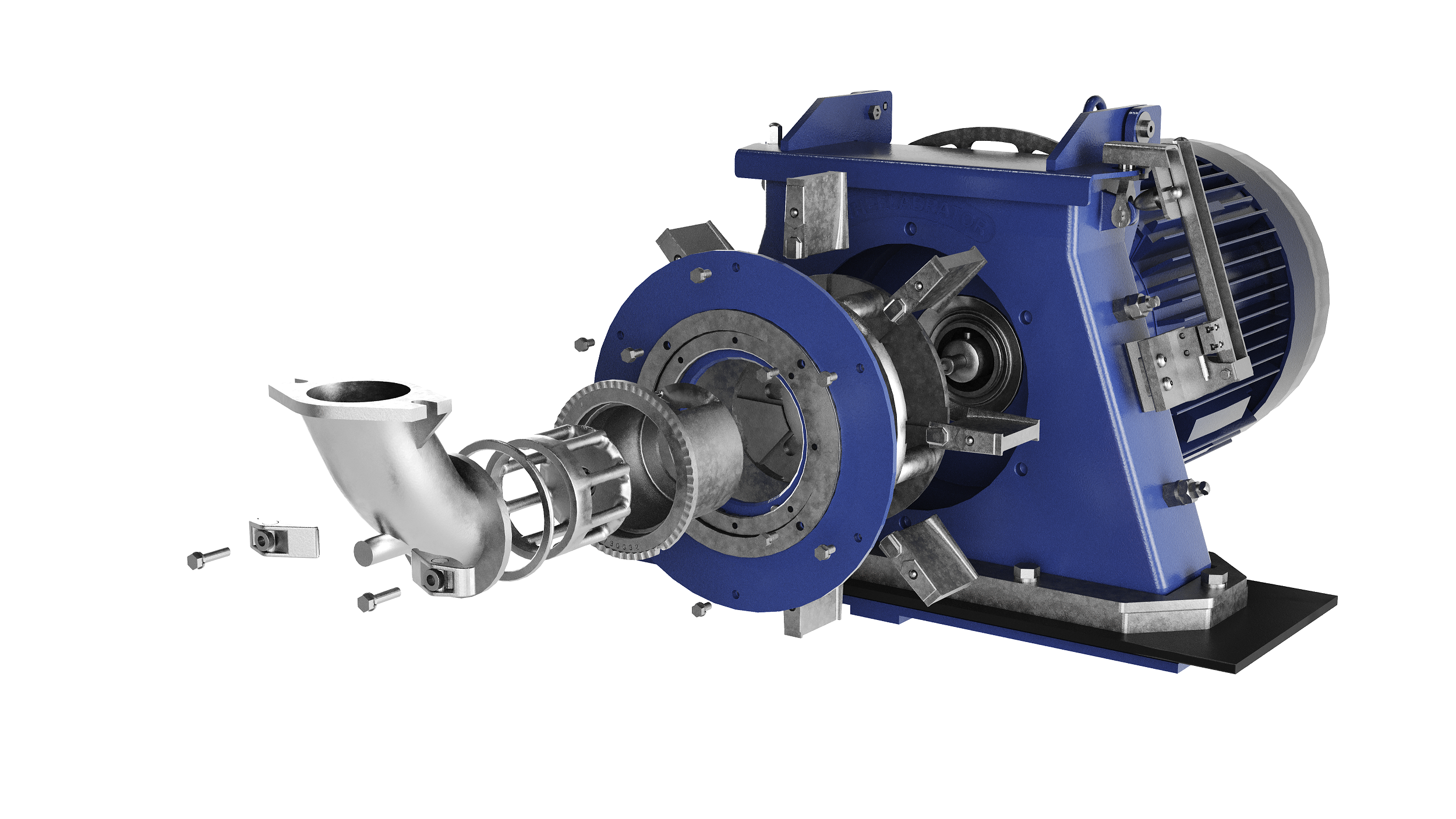
The logical upgrade from batch tumblast
The performance of the CT-4 has made Waupaca strongly consider installing another. The foundry is also investigating Wheelabrator’s blast simulation testing to extract extra capacity from its Spinner Hangers when processing non-tumbleproof parts and speed up their configuration for new products.
“I would say to any foundry that, if they're using a batch tumblast process, Wheelabrator’s TUMBLAST Continuous (CT) is a perfect replacement,” says Michael. “You're going to get more streamlined workflow with better quality. We’re looking at our product mix again and seeing where another CT might fit in.”