

“Four blast cycles instead of three in the same time – that’s more throughput per shift through transparency alone."
Musashi digitizes shot blast operations with Monitizer
Japanese automotive supplier Musashi manufactures high-quality forged and rolled parts for major carmakers at its Lüchow plant in northern Germany. Recently, the team there has digitized the first of four Wheelabrator shot-blasting machines – instantly making blast operations visible and delivering positive results across production efficiency, cost calculation, and sustainability.
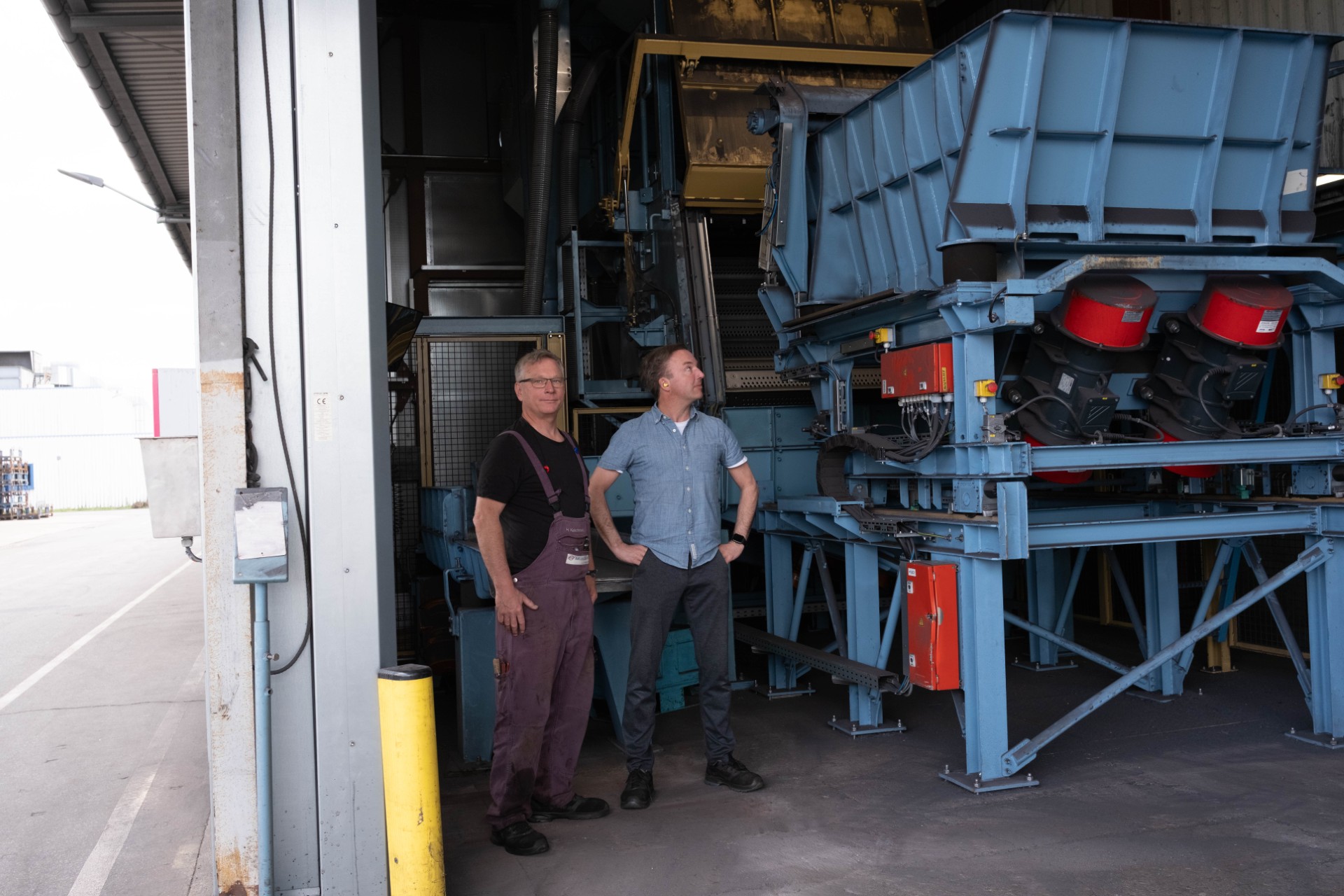
Musashi’s production facility in Lüchow manufactures forged and rolled automotive components for global OEMs - shafts, gears, suspension parts, and hubs – essentially, most moving parts on a vehicle. Production happens on seven presses, five furnaces and four shot-blasting machines. The blast process removes mill scale, which at Musashi forms during the annealing stage rather than during the forging process itself.
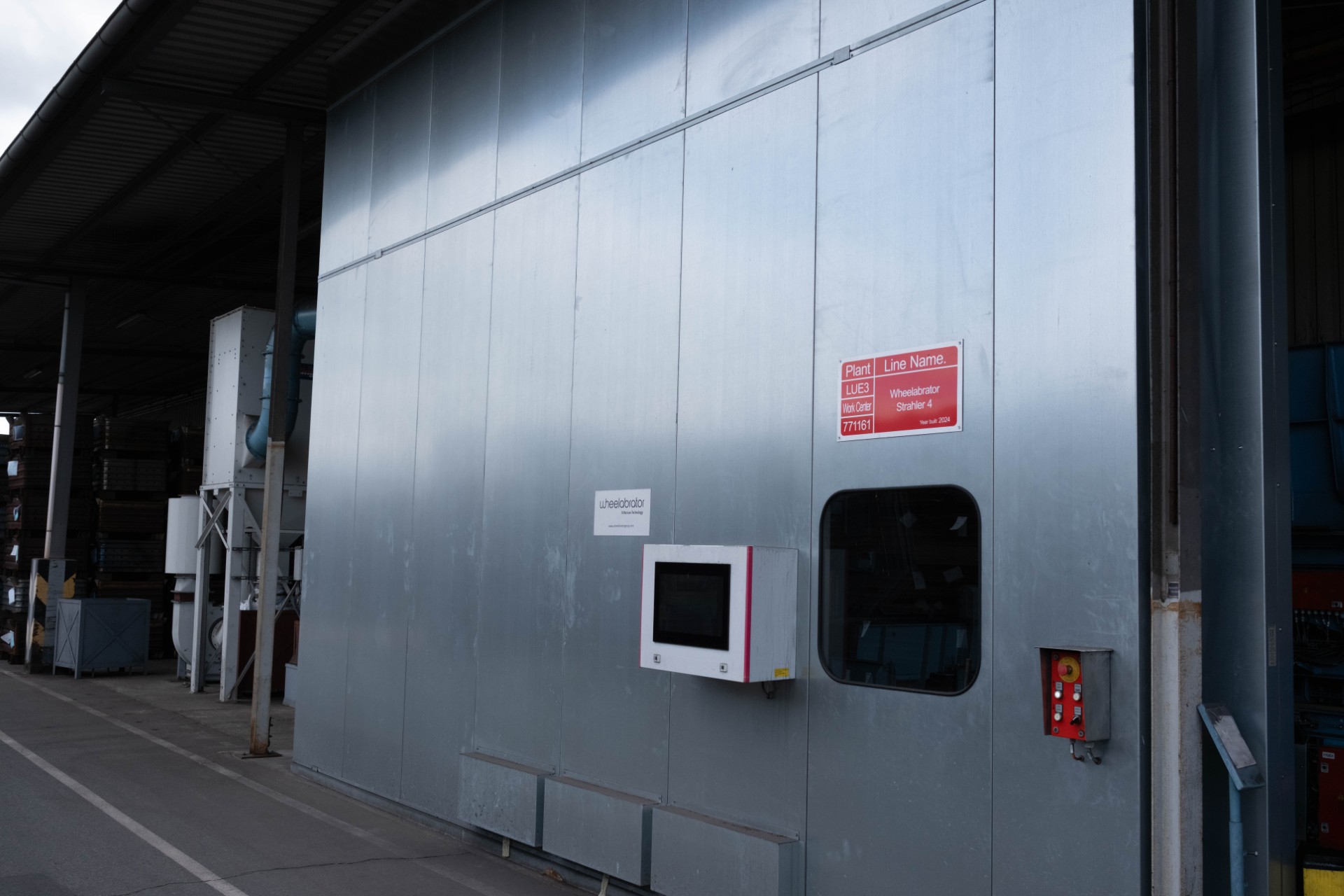
The newest of the four blast machines - a TUMBLAST® from Wheelabrator - was commissioned in 2023 and came digitally enabled (featuring the NoriGate data interface). Digitizing the machine presented a perfect opportunity to explore the potential of a digital shot-blasting process.
The IIoT platform Monitizer | DISCOVER is process- and equipment-agnostic, but is particularly well-suited to monitoring complex technical processes such as shot blasting, melting, moulding, and mould sand preparation. Plus, the Wheelabrator team has tailored the platform to the specific requirements of shot-blasting operations through preconfigured dashboards.
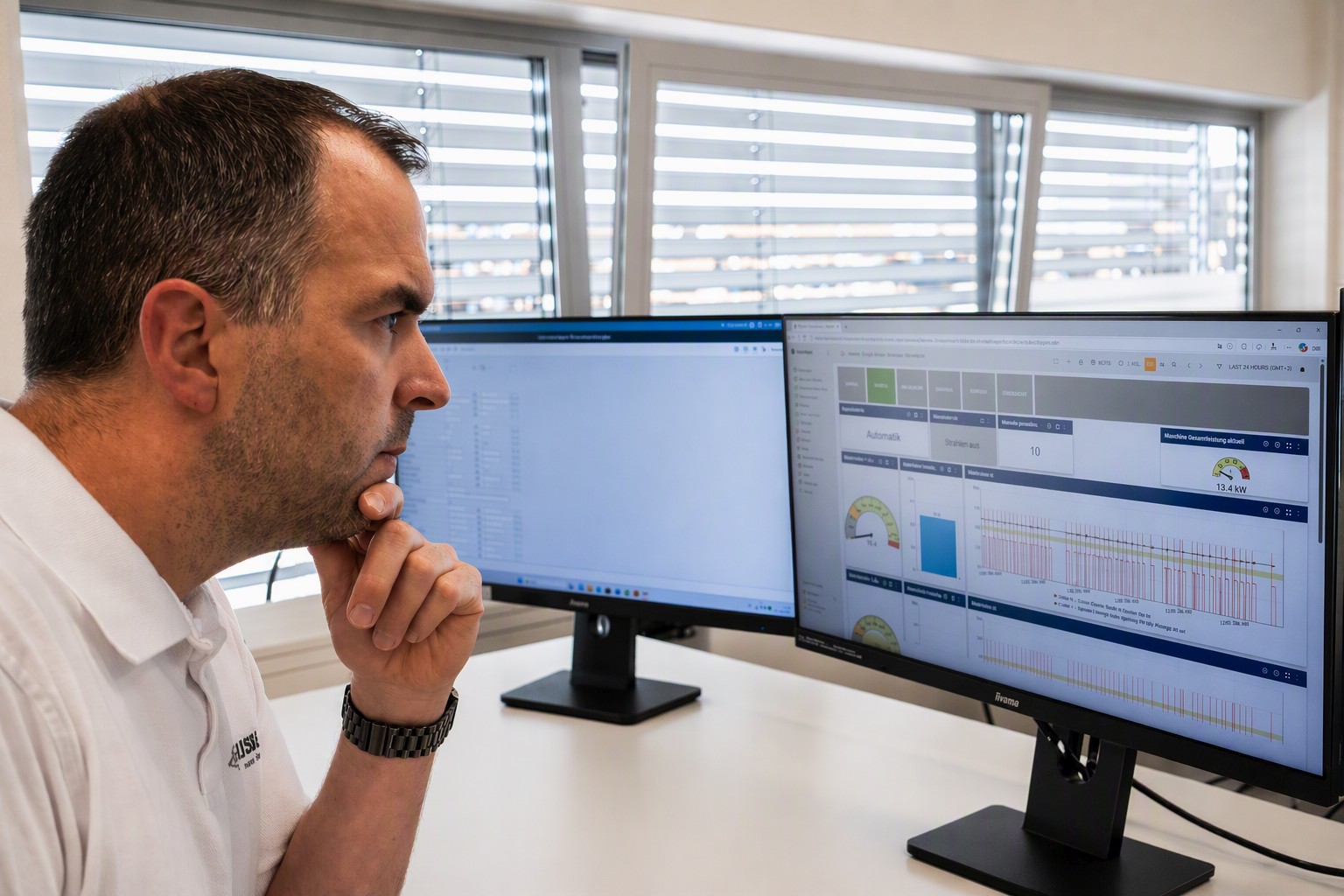
— Oliver Pust, Hot Forming Supervisor at Musashi"Monitizer gives us real transparency for the first time. We can visualize our blast operations and track key performance indicators in real time. We can now see everything at a glance - blasting times, loading and unloading times, utilization rates (hourly, daily, weekly), and energy and abrasive consumption - while also comparing data shift by shift to better optimize production. If anything goes off track, we can intervene immediately."
Are we sticking to the correct blasting times?
An important early success of the blast machine digitalization was the avoidance of over- and under-blasting caused by a failure to adhere to specified blasting times.
If the blast duration is too short, it will show up in quality control. Conversely, if blasting lasts 16 minutes instead of the optimal 12 minutes per batch, that causes a 33% higher energy and blast media costs to treat the parts, as well as unnecessary wear on the machine. While the furnace upstream from the blast machine is currently the bottleneck, consistently adhering to blast times would, in principle, allow for a larger volume of products per shift to be blasted.
Oliver Pust adds: "Four blast cycles instead of three in the same time – that’s more throughput per shift through transparency alone. We can only optimize what we can see. How many batches of a product have already been blasted? How much did the night shift manage to complete? Are there any hold-ups? With Monitizer, we have fast access to the answers."
Under control: energy and abrasive consumption
The Monitizer installation on the shot-blast machine integrates seamlessly into the production-wide Manufacturing Execution System (MES), enabling for example the analysis of consumption data on a per-order basis. With the planned addition of QR-code-based workpiece recognition, blast process data will soon be directly linked to the product, allowing for even more detailed analyses.
Sebastian Riesch, Production Manager at Musashi, explains: "MES systems are heavily focused on production management but do not map individual machines in detail. With Monitizer, we gain greater visibility into the machine, allowing us to precisely capture the technical process. This also helps with cost calculation, as we can finally view and compare actual consumption figures for specific products."
Precision maintenance
In a facility where production runs on three shifts, seven days a week, 340 days a year, unplanned downtime is a problem. It’s why the Musashi team has recently started using the maintenance function in Monitizer, which enables precise, structured maintenance of the blast machine. Maintenance becomes predictable, while equipment wear and the service life of wear parts become visible. The system also monitors signals from the equipment in real time, providing early indications of emerging issues.
Sebastian Riesch adds: "With the non-digitized blast machines, we have to perform constant manual checks - monitoring the power consumption of the blast wheels and visually inspecting key components and wear parts. With Monitizer, all of this is digitally recorded. If there is an imbalance in a blast wheel or a parameter deviates from the norm, we automatically receive an email notification and can intervene before wear gets out of hand or blast performance dips."
No ego: a friendly IIoT platform
The Musashi team also appreciates the modularity and flexibility of the Monitizer digitalization solution. The platform communicates seamlessly with other systems, integrates easily, and allows for further internal development. When site IT policies prevented a connection to the internal LAN, the system was switched to mobile data transmission. If new metrics are required, they can be created easily from existing key performance indicators.
The fact that the system is equipment-agnostic sparked further ideas for the Musashi team: Could Monitizer also be used to monitor furnace temperatures and record them in a tamper-proof manner? This would make it easier to meet automotive audit standards and accelerate the generation of quality documentation for customers.
Oliver Pust concludes: "Digitalizing the shot-blast machine with Monitizer was straightforward and quickly paid off. It helps us optimize processes, identify error sources quickly, and ensure quality in the long term. We see potential for productivity gains of up to 20% if we extend the system to the other three blast machines."